
Leaving a dog home alone all day is unavoidable for many owners. Work, school, and long hours away from home are part of modern life. The problem is that dogs are not built to sit idle for hours with nothing to do. When their minds are underused, boredom often turns into anxiety, barking, chewing, or destructive behavior.
The right kind of mental stimulation for dogs home alone all day can dramatically change how your dog behaves while you are gone. It helps them relax, stay occupied, and cope better with alone time.
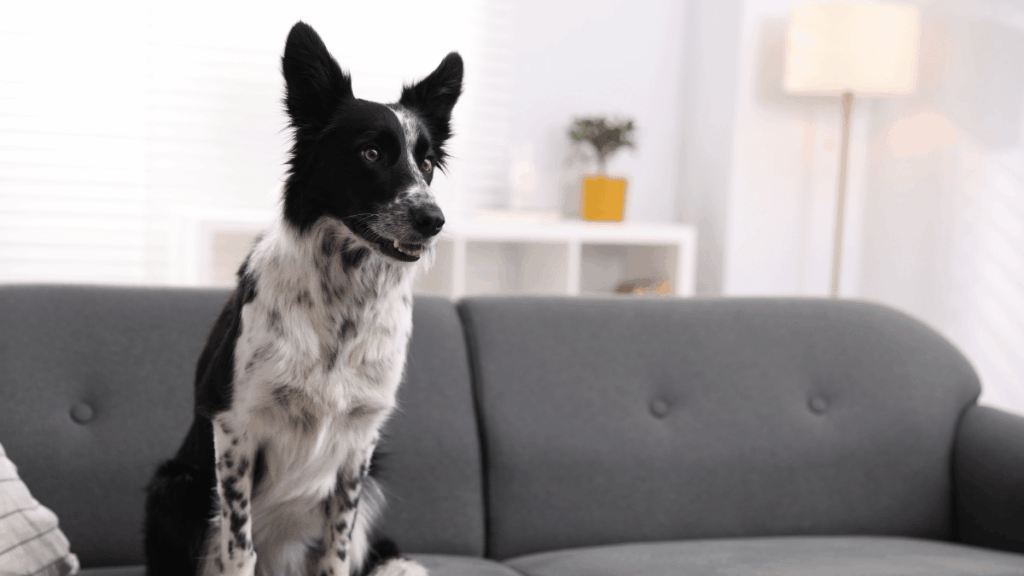
This guide focuses on practical, realistic strategies that work for everyday dog owners.
Why dogs struggle when left alone all day
Most behavior problems that happen when a dog is alone are not caused by disobedience. They are caused by unmet mental needs.
Dogs need:
- Mental challenges
- Predictable routines
- Opportunities to sniff, chew, and problem-solve
- Calm ways to release energy
When these needs are not met, dogs create their own stimulation. That is when furniture gets destroyed and neighbors hear nonstop barking.
Mental stimulation helps by:
- Reducing boredom
- Lowering stress
- Making time pass faster
- Encouraging calmer behavior
Signs your dog is bored when home alone
Many owners miss the early signs of boredom. Common clues include:
- Chewing furniture, shoes, or baseboards
- Barking or howling after you leave
- Pacing or restlessness
- Overexcitement when you return
- Sleeping all day but acting wild at night
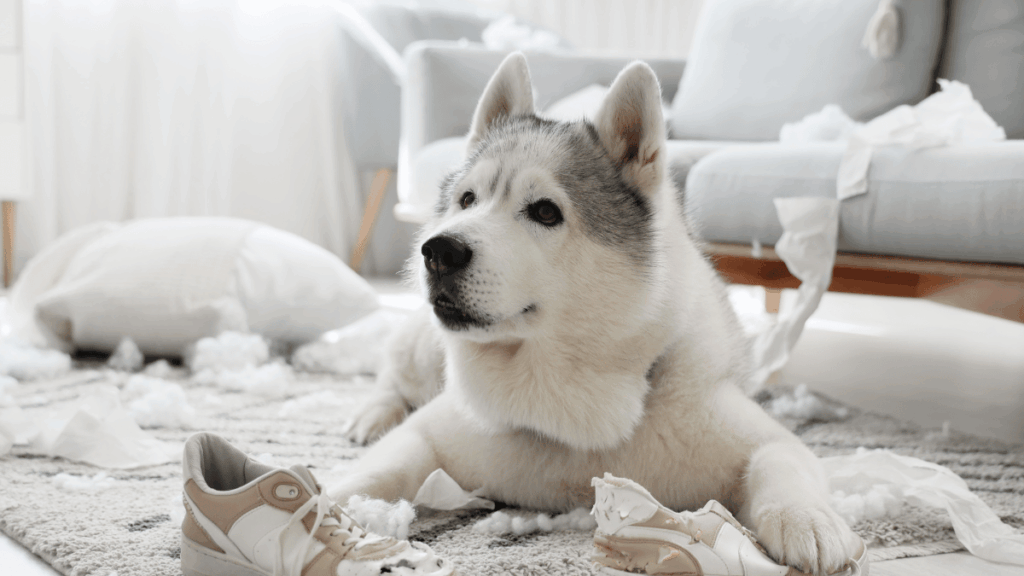
If these behaviors mainly happen when your dog is alone, mental stimulation is likely missing from their routine.
Mental stimulation vs physical exercise
Walks are important, but they are not enough by themselves.
Physical exercise:
- Burns energy
- Improves fitness
Mental stimulation:
- Works the brain
- Satisfies natural instincts
- Creates longer-lasting calm
Ten minutes of focused mental work can be more tiring than a long walk. The best results come from using both.
Start the day with mental work
What you do before leaving the house matters more than most people realise.
Before you leave:
- Do a short training session
- Practice basic cues like sit or stay
- Play a simple problem-solving game
- Feed breakfast using enrichment instead of a bowl
This helps your dog settle into a calmer mindset before being left alone.
| Product | Price Range | Best For | Rating |
|---|---|---|---|
| KONG Senior Classic | £10–15 | Gentle chewing, calming enrichment | ⭐⭐⭐⭐⭐ |
| Snuffle Mat | £15–20 | Low-impact sniffing, anxious seniors | ⭐⭐⭐⭐☆ |
| Outward Hound Puzzle | £12–20 | Cognitive stimulation, beginners | ⭐⭐⭐⭐☆ |
| Lick Mat | £8–10 | Calm focus, stress reduction | ⭐⭐⭐⭐⭐ |
| Treat-Dispensing Ball | £10–18 | Light movement, boredom relief | ⭐⭐⭐⭐☆ |
Use food-based enrichment wisely
Food-based enrichment is one of the most effective forms of mental stimulation for dogs home alone all day.
Instead of feeding meals from a bowl, try:
- Puzzle feeders
- Treat-dispensing toys
- Snuffle mats
- Frozen food toys
These tools force your dog to think, sniff, and problem-solve, keeping them occupied much longer than a standard meal.
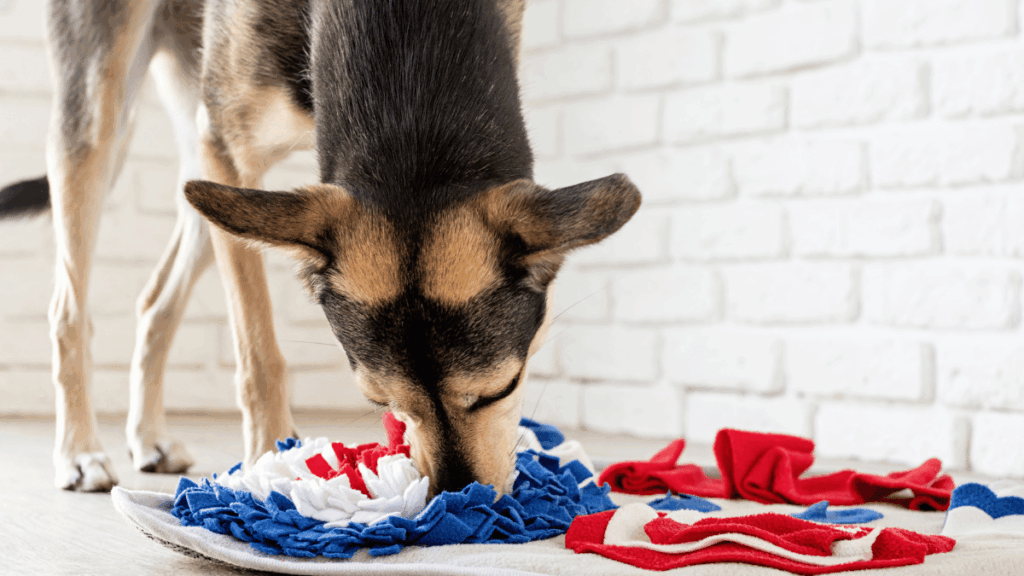
These activities are especially good for anxious dogs and senior dogs.
Create a calm alone-time routine
Dogs feel safer when their day follows a pattern.
A simple routine might look like:
- Morning walk or play
- Short mental exercise
- Breakfast from enrichment
- Calm goodbye
- Enrichment toys left out
- Quiet rest time
Avoid dramatic exits. Calm departures help dogs settle faster.
Consider monitoring tools if needed
Some owners find it helpful to see what their dog does when alone.
A basic dog camera can:
- Show how long your dog stays calm
- Help identify boredom or anxiety
- Guide future enrichment choices
What to avoid
Not all stimulation is helpful.
Avoid:
- Toys that cause frustration
- Overstimulating gadgets
- Leaving unsafe chews unsupervised
- Relying on one toy every day
Mental stimulation should lower stress, not increase it.
How much mental stimulation is enough?
Most dogs benefit from:
- 10–20 minutes of mental work before you leave
- 1–3 enrichment activities while alone
- Mental engagement again when you return
If your dog is calmer and less destructive, you are doing it right.
When enrichment alone is not enough
If your dog panics, injures themselves, or vocalises nonstop when alone, mental stimulation alone may not solve the issue. Separation anxiety may be involved, and structured training may be needed.
Enrichment still helps, but it works best alongside proper behavior training.